
Language & Currency
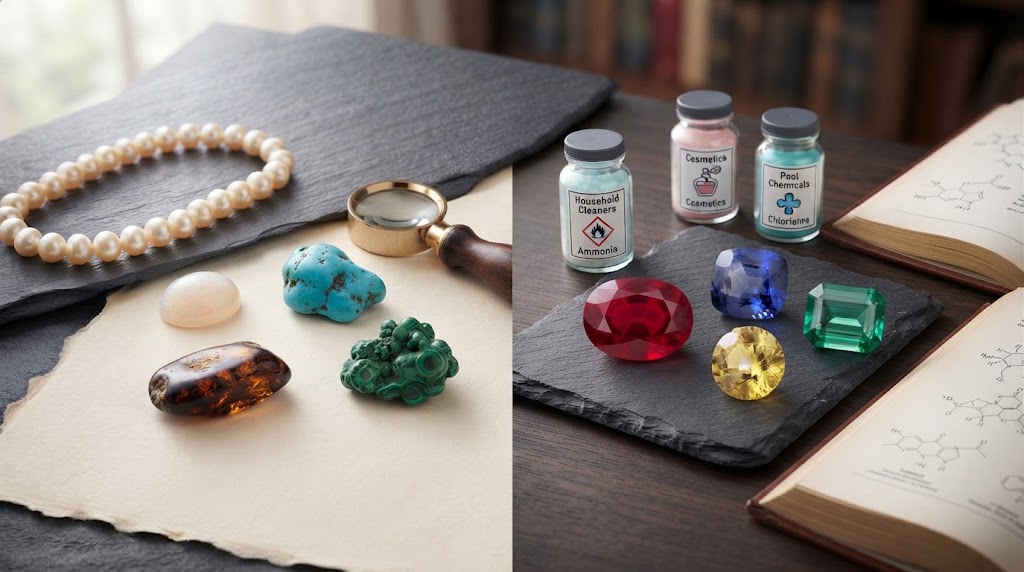
When wearing or cleaning fine gemstone jewelry, it is easy to assume that all stones can handle standard household cleaners, soaps, cosmetics, and perfumes. In reality, chemical exposure is one of the leading causes of permanent damage to natural gemstones and precious metals.
Because different minerals have unique chemical compositions and porosities, certain gemstones react aggressively to everyday chemicals, losing their color, polish, or structural integrity.
This guide breaks down which gemstones are most vulnerable to chemical exposure and how to keep your collection safe.
In this guide
1. Highly Vulnerable Gemstones (Porous, Organic, & Treated)
These stones have microscopic pores, high organic content, or artificial fracture-filling treatments. Chemicals can easily trap inside them, strip their coatings, or react with their mineral structure.
- Pearls and Coral (Organic Gems): Pearls are composed of calcium carbonate, which dissolves easily in acid. Even mild chemicals found in hairspray, perfume, lotions, and skin oils can pit, dull, and erode the delicate nacre surface.
- Opals: Opals are porous and contain trapped water. Chemical solvents, alcohol-based perfumes, and harsh detergents can dry them out, strip their internal moisture, and cause irreparable fading or cracking (crazing).
- Turquoise and Malachite: These copper-based, porous minerals absorb chemicals like a sponge. Harsh soaps, chlorine, and lotions can alter their vibrant blue and green colors, turning them dull, chalky, or discolored.
- Emeralds: Most natural emeralds undergo oil, resin, or polymer fracture-filling treatments to enhance their clarity. Harsh chemical jewelry dips, ultrasonic cleaners, and alcohol can dissolve these fillers, making internal inclusions suddenly appear much more prominent.
2. Acid-Sensitive and Soft Minerals
Certain mineral crystals react chemically when exposed to acids, ammonia, or sulfur compounds commonly found in household cleaning products.
- Amber: As fossilized tree resin, amber is very soft and chemically sensitive. Alcohol, acetone, perfume, and insect repellent will literally melt or permanently mar the surface of amber jewelry.
- Calcite, Fluorite, and Apatite: These softer, lower-hardness minerals are easily etched by acidic solutions (including vinegar and citrus-based cleaners). Chemical exposure can instantly ruin their crystal polish.
- Kachinas, Pyrite, and Marcasite: Iron-bearing sulfide minerals like pyrite can oxidize, tarnish rapidly, or break down chemically when exposed to moisture mixed with harsh soaps or cleaning chemicals.
Summary Table: Quick Reference for Buyers
| Gemstone | Chemical Sensitivity | Key Risk Factors | Safe Cleaning Method |
| Pearls & Coral | Extreme ❌ | Perfumes, lotions, hairspray, acids | Wipe gently with a soft, dry or damp microfiber cloth. |
| Opals | High ❌ | Alcohol, solvents, harsh soaps, cosmetics | Wipe with a clean, damp cloth; keep away from chemicals. |
| Turquoise & Malachite | High ❌ | Body oils, lotions, chlorine, detergents | Clean with a dry or barely damp cloth; never submerge in chemicals. |
| Emeralds | Moderate ⚠️ | Ultrasonic cleaners, chemical dips, hot water | Warm water only; avoid chemical solvents due to oil treatments. |
| Amber | Extreme ❌ | Perfume, alcohol, acetone, insect repellent | Soft dry cloth only; keep entirely clear of chemical sprays. |
| Sapphire & Ruby | Low (Safe) ✅ | Highly resistant to most common chemicals | Mild soap, warm water, and a soft brush. |
Best Practices to Protect Your Jewelry from Chemicals
To keep your gemstone jewelry looking pristine for decades, adopt these simple preventative habits:
- The “Last On, First Off” Rule: Always put your gemstone jewelry on after you have applied makeup, hairspray, perfumes, and lotions. Take them off before applying hand sanitizer or sunscreen.
- Remove Jewelry Before Chores: Take off all rings and bracelets before cleaning your house, doing dishes, or handling harsh chemicals like bleach, ammonia, or oven cleaner.
- Avoid Commercial Jewelry Dips: Never throw delicate, porous, or treated stones (like opals, pearls, turquoise, or emeralds) into commercial chemical jewelry cleaning solutions. When in doubt, plain warm water and a soft microfiber cloth are the safest choice.
Shop with Confidence Online
Knowing how to shield your collection from everyday chemicals ensures your favorite pieces retain their brilliance and value over time.
Explore our exquisite collection of durable, everyday-wear [gemstone jewelry and fine rings/link to store category], complete with detailed material specifications and care guidance.
Frequently Asked Questions
Q: Can hand sanitizer ruin my gemstone ring?
A: Yes, frequent exposure to alcohol-based hand sanitizers can dry out organic stones like pearls and amber, strip coatings off treated stones, and leave a cloudy residue on soft gems. It is best to remove your rings before sanitizing your hands.
Q: Can I use an ultrasonic jewelry cleaner on my emerald ring?
A: No! Ultrasonic cleaners use intense vibrations and heated chemical solutions that can completely strip out the natural oils or resins used to enhance emerald clarity, potentially causing the stone to fracture.

Written bySaraStones Team
The SaraStones team shares practical, easy-to-follow guides on gemstones, gemstone jewelry, jewelry making and home décor, to help you choose, style and care for your pieces with confidence.
Keep reading
 How to Protect Gemstone Jewelry From ScratchesScratches usually come from small daily habits. Learn how stone hardness works, which routines cause surface wear, and the storage…
 Which Gemstones Can Get Wet?Water is harmless to some stones and risky for others. Learn the general rules, why porous or treated stones need…